The right of the people to keep and bear arms carries with it an equally important obligation: discipline, safety, and lawful stewardship. Preparedness is not defined by accumulation, but by competence — built deliberately, in proper order, and grounded in responsibility.
The 55th Light Foot approaches equipment and training through this lens of ordered development. Capability begins with foundational safety, reliability, and sustainment. Only after these essentials are understood and maintained does one responsibly progress toward more advanced tools or specialized equipment. This method reflects a long-standing American tradition: citizens prepared not for disorder, but for resilience, defense, and the preservation of community.
The Gear Acquisition Hierarchy, developed by Matt Robertson — The Everyday Marksman, articulates this progression clearly and thoughtfully.
The image is drawn from his blog post, “Do You Really Need That? A Better Gear Philosophy.” In the article, Robertson presents an alternative to traditional military-style “line” gear structures, proposing instead a staged, civilian-focused progression of capability. His framework emphasizes foundational safety, reliability, sustainment, and disciplined skill development before advancing to specialized or conflict-oriented equipment. This philosophy closely aligns with the principles and ordered approach to preparedness upheld by the 55th.
We encourage readers to review Robertson’s website. The Everyday Marksman is full of valuable information. His writing offers thoughtful guidance on responsible equipment selection, training progression, and the disciplined mindset required for civilian preparedness.
While the hierarchy provides a valuable conceptual guide, the 55th applies these principles within our own structured training culture — always emphasizing safety, legality, accountability, and respect for the constitutional framework that underpins our civic responsibilities.
Preparedness, rightly understood, is not escalation. It is ordered readiness in service of community and country.
While informed by this philosophy, the 55th organizes equipment and training through the framework of our four core pillars: Communications, Medical Preparedness, Operations and Response, and Sustainment. Within this structure, capability develops in balanced stages, ensuring that equipment never outpaces training, judgment, or lawful responsibility.
Within this framework, the following equipment categories are provided for general reference and educational purposes only. They do not constitute a mandate or prerequisite for participation. Members and prospective participants are not expected to possess all listed items, particularly at the outset of involvement.
Capability develops over time in accordance with individual training, demonstrated proficiency, assigned roles, and accumulated experience. The items identified herein reflect equipment that has proven practical and effective across a range of preparedness activities. They are presented to support informed, responsible decision-making — not accumulation for its own sake.
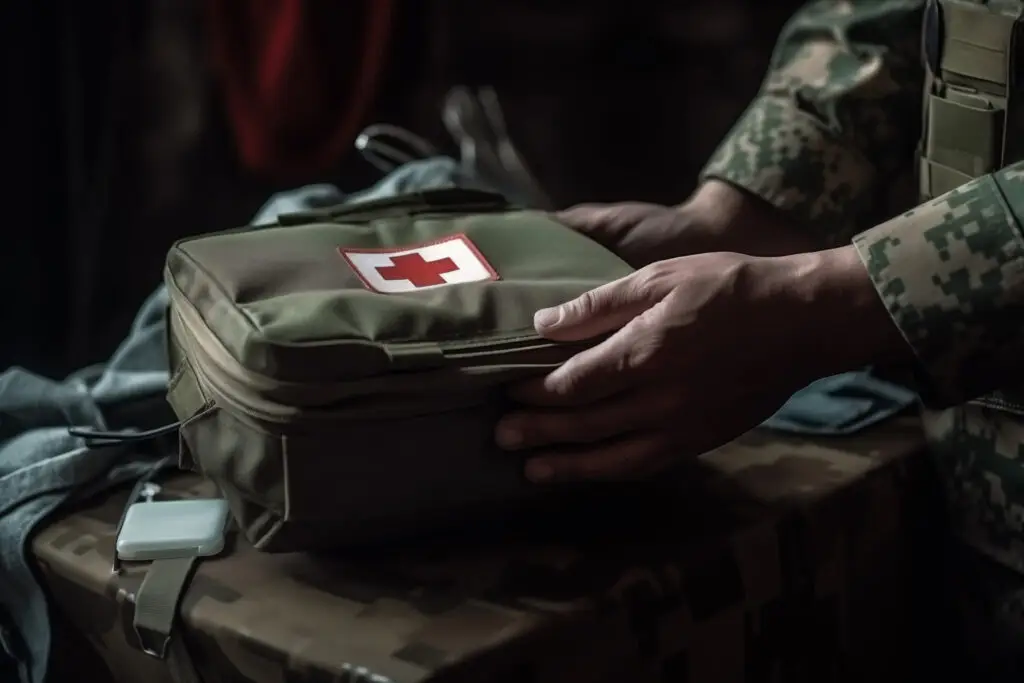
When seconds matter and conditions are chaotic, the right equipment can mean the difference between life and death. The Rapid Aid Trauma Sleeve (R.A.T.S.) was designed for immediate response in critical trauma situations—gunshot wounds, knife injuries, severe bleeding, and other life-threatening emergencies where hesitation is not an option.
Built for speed, simplicity, and reliability, the R.A.T.S. system is engineered to control hemorrhage fast and stabilize the injured until higher-level care is available.
The full trauma kit goes beyond a single tool, providing essential components—such as tourniquets and other critical supplies—needed to address severe injuries in the field.
Rapid Aid Trauma Sleeve ( R.A.T.S) was designed for immediate response in critical life-to-death situations. Belt-mountable with laser-cut MOLLE/PAL or pre-cut belt loop. Available as Pouch Only or as a Fully Stocked Medical Kit.
This is not convenience gear. This is vital gear—for situations where preparedness saves lives.
An Individual First Aid Kit is required and is a recommended starting point when building personal readiness gear. An IFAK differs from a basic consumer first aid kit in that it is designed to address life-threatening injuries, prioritizing emergency response over minor first aid needs. Typical IFAK contents may include bleeding control supplies, basic airway support items, and trauma management components intended for emergency situations.
Many members choose to assemble their own IFAK over time, which is perfectly acceptable, and many local businesses carry the materials needed to build or purchase a proper kit.
For those seeking another reference point, this IFAK option is recommended by the 55th Light Foot Medical Officer. It meets core requirements while remaining affordable. Please note that a standard over-the-counter first aid kit is not a substitute for an Individual First Aid Kit.