
The Constitution of the United States establishes the legal framework of the United States, defining the structure of government, the distribution and limits of authority, and the rights of the people. It serves as the highest governing document and provides the foundation for all federal and state law.
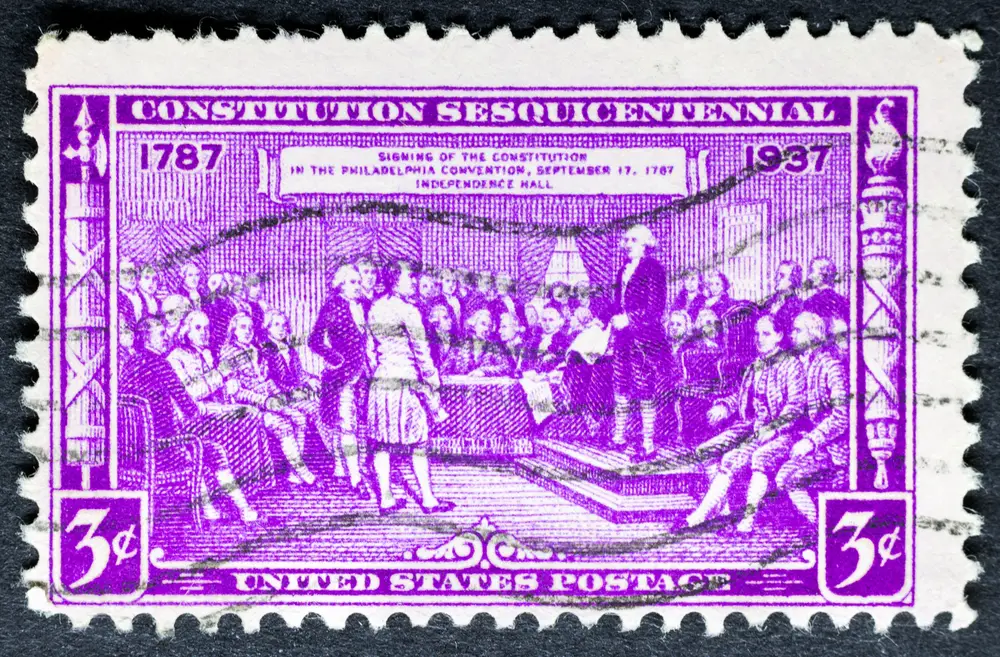
The Constitution was signed on September 17, 1787, in Philadelphia, Pennsylvania, at the conclusion of the Constitutional Convention.
The Preamble explains the purpose of the Constitution. It affirms that governing authority comes from the people and identifies the goals of the document: unity, justice, peace, defense, well-being, and liberty—both for the present and future generations.
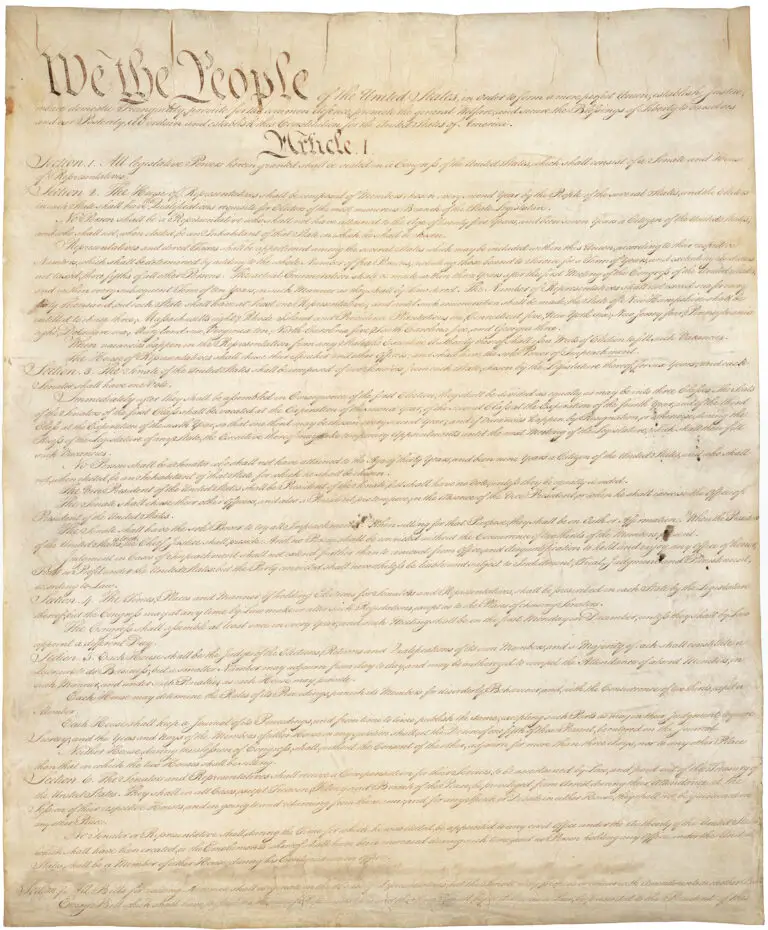
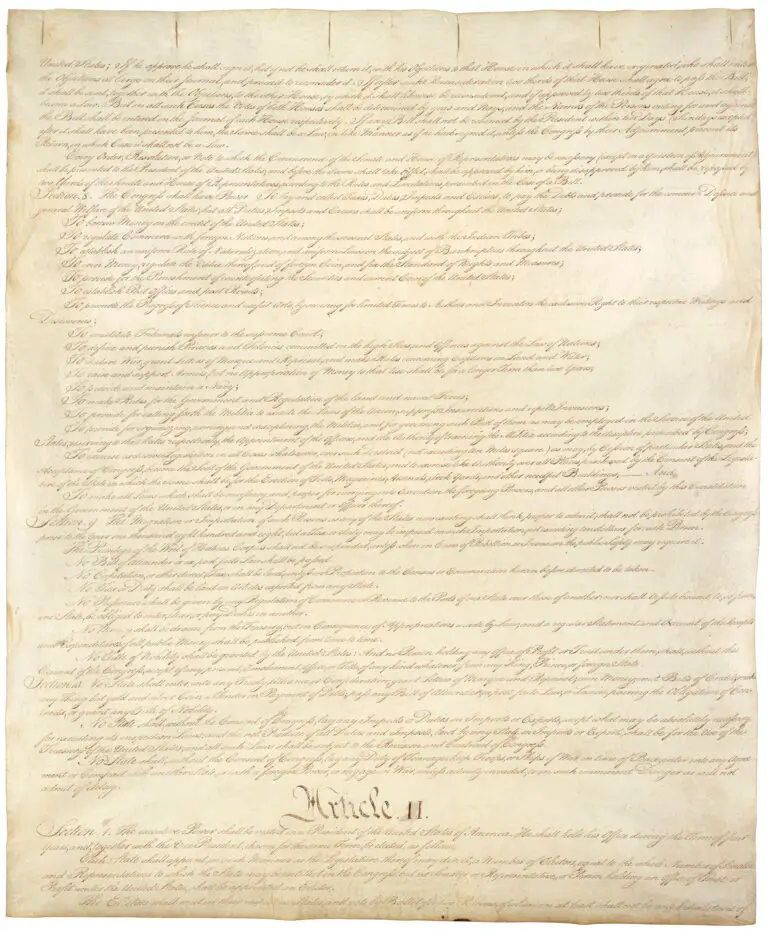
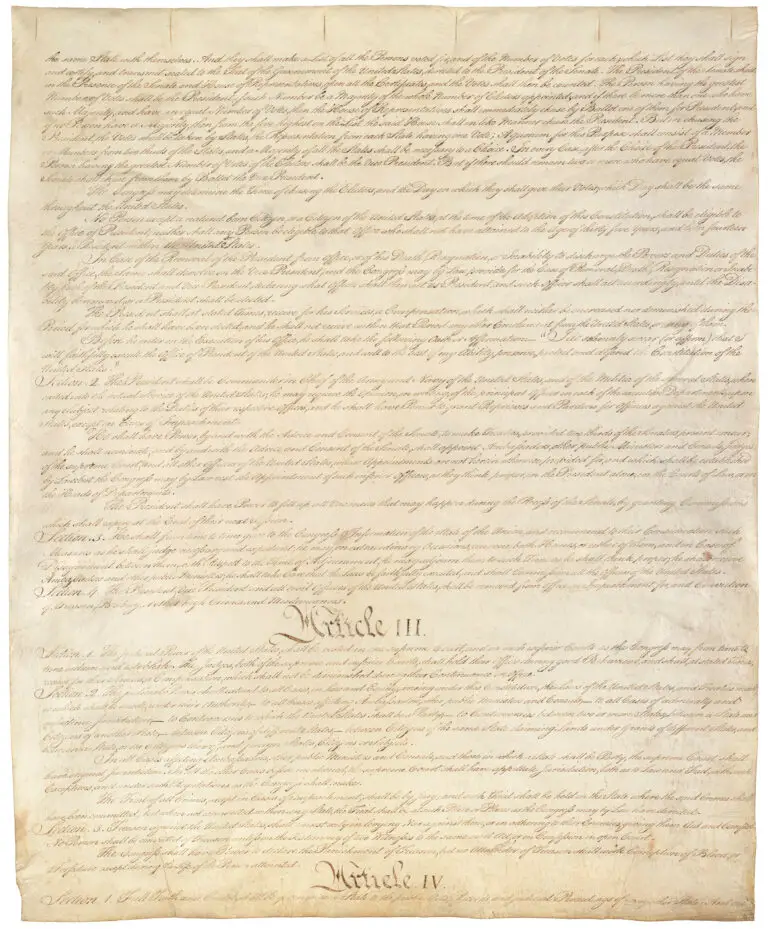
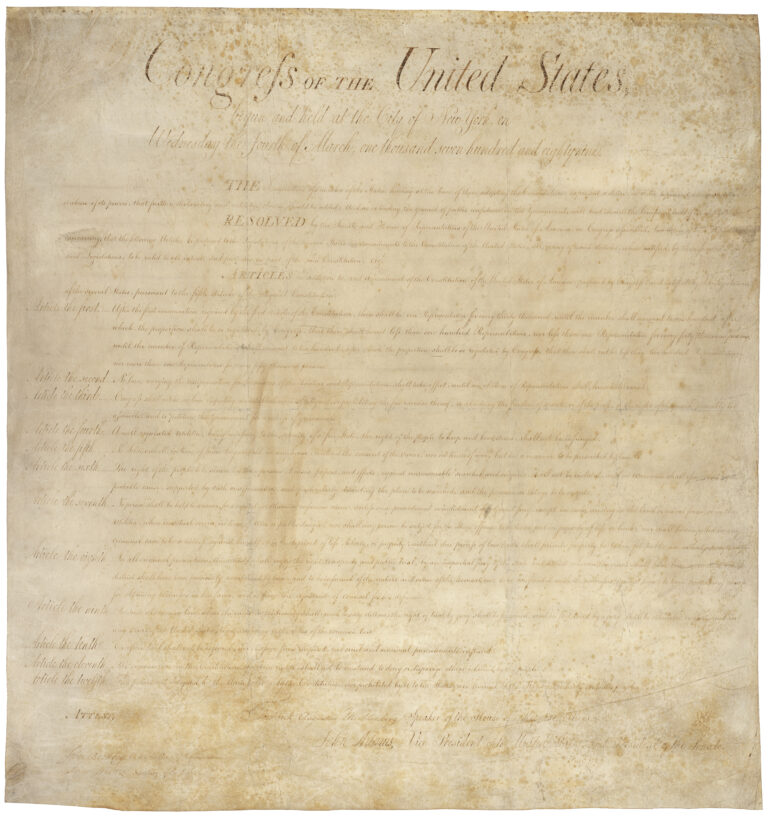
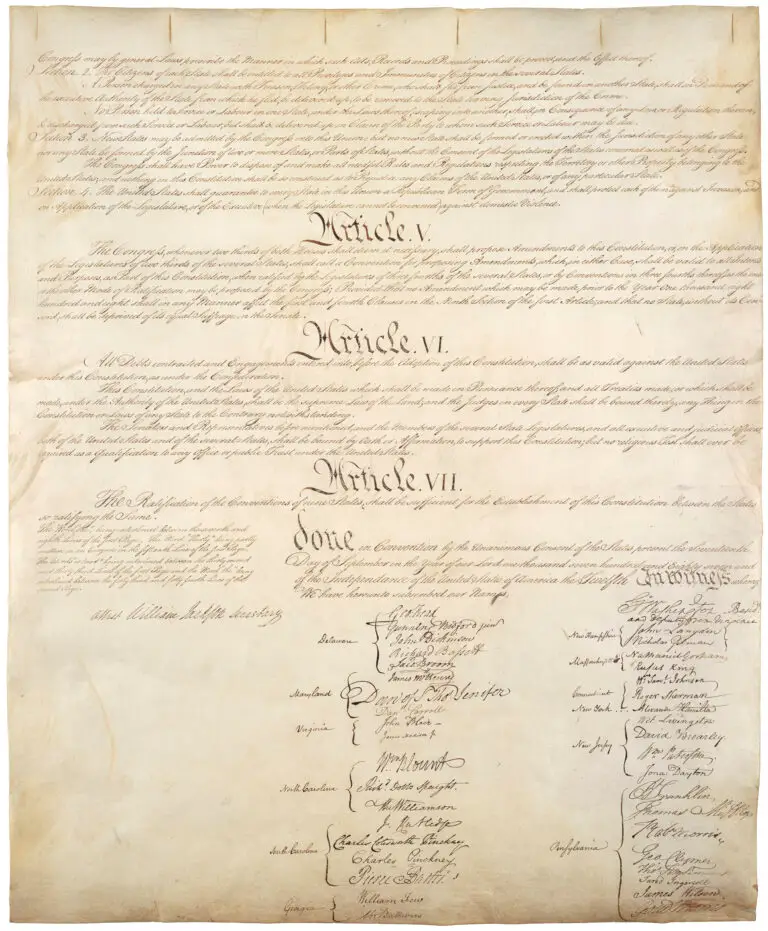
Constitution and Bill of Rights of the United States of America from the National Archives in Washington, D.C.
We the People of the United States, in Order to form a more perfect Union, establish Justice, insure domestic Tranquility, provide for the common defence, promote the general Welfare, and secure the Blessings of Liberty to ourselves and our Posterity, do ordain and establish this Constitution for the United States of America.
The Constitution of the United States of America
The Constitution is organized into seven Articles, each addressing a core element of governance.
Amendments allow the Constitution to be clarified, expanded, or corrected over time.
The first ten amendments, known as the Bill of Rights, protect fundamental individual freedoms such as speech, religion, due process, and protection from unreasonable searches.
Later amendments address voting rights, equal protection, term limits, and changes to governance procedures.
Together, the amendments reinforce the Constitution’s purpose: to protect liberty while maintaining lawful order.
The Constitution remains relevant because it defines both authority and restraint. It establishes what government may do, what it may not do, and how power is distributed to prevent concentration or abuse.
For preparedness, civic responsibility, and community organization, understanding this framework provides essential context for lawful conduct, disciplined coordination, and respect for individual rights.
Misconception: The Constitution was signed by U.S. presidents.
Reality: No presidents signed the Constitution. At the time it was signed, the office of President did not yet exist.
Misconception: George Washington signed the Constitution as President.
Reality: George Washington signed the Constitution as a delegate from Virginia and as the presiding officer of the Constitutional Convention. He became President later, after the Constitution was ratified.
Misconception: The Constitution went into effect immediately after it was signed.
Reality: The Constitution required ratification by the states and went into effect in 1789.
Misconception: The Constitution cannot be changed.
Reality: The Constitution includes a formal amendment process, allowing it to evolve while maintaining stability.
Misconception: The Constitution primarily limits citizens.
Reality: The Constitution primarily limits government power, defining its authority while protecting individual rights.
The National Archives in Washington, D.C. preserves the Constitution, the Bill of Rights, and the Declaration of Independence—collectively known as the Charters of Freedom.
These founding documents have shaped the legal structure, rights, and governing philosophy of the United States for more than two centuries and remain central to the nation’s civic framework.
The National Archives provides extensive historical context and offers free, high-resolution digital copies of these documents, available to the public.
The National Archives also hosts an online experience that allows individuals to add their name as a symbolic signer of America’s founding documents – the Declaration of Independence, which in 1776 asserted the colonies’ separation from British rule, and the Constitution, which in 1787 established the framework of the United States government. Join the signers of America!
This material is provided for educational purposes as part of the 55th’s Resources & Training reference.